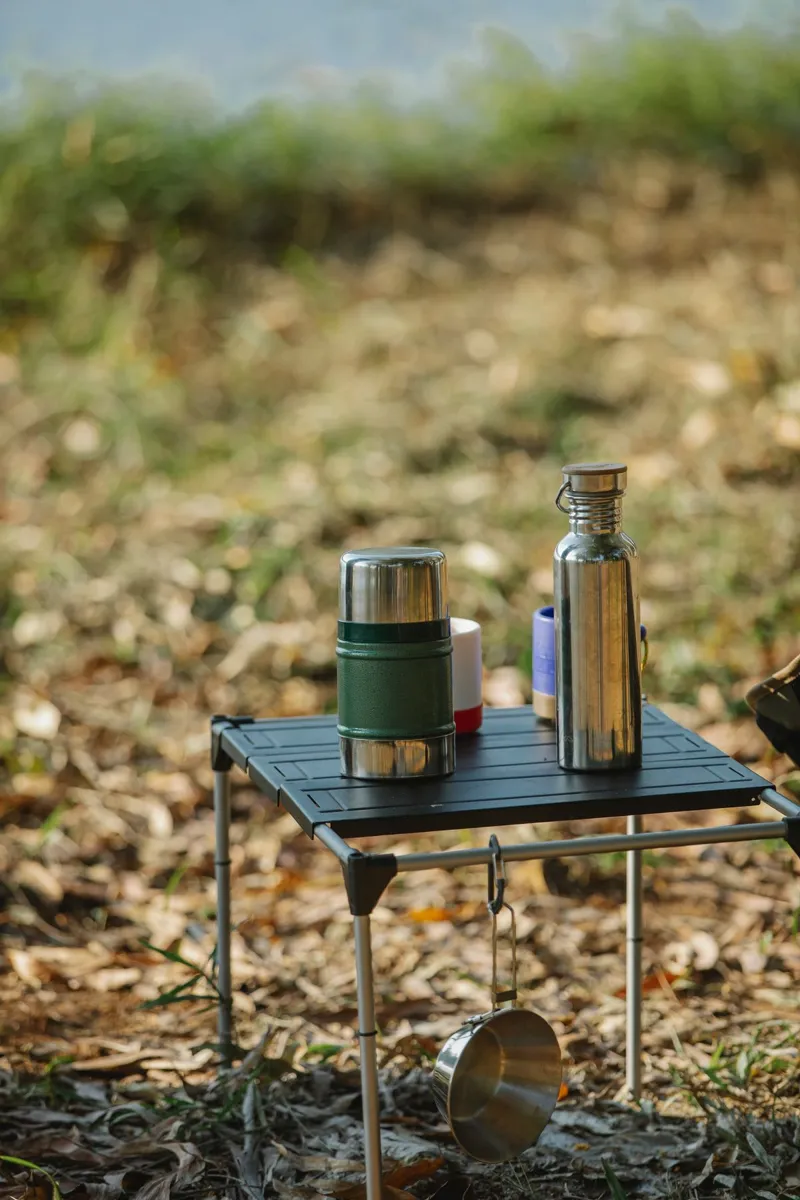
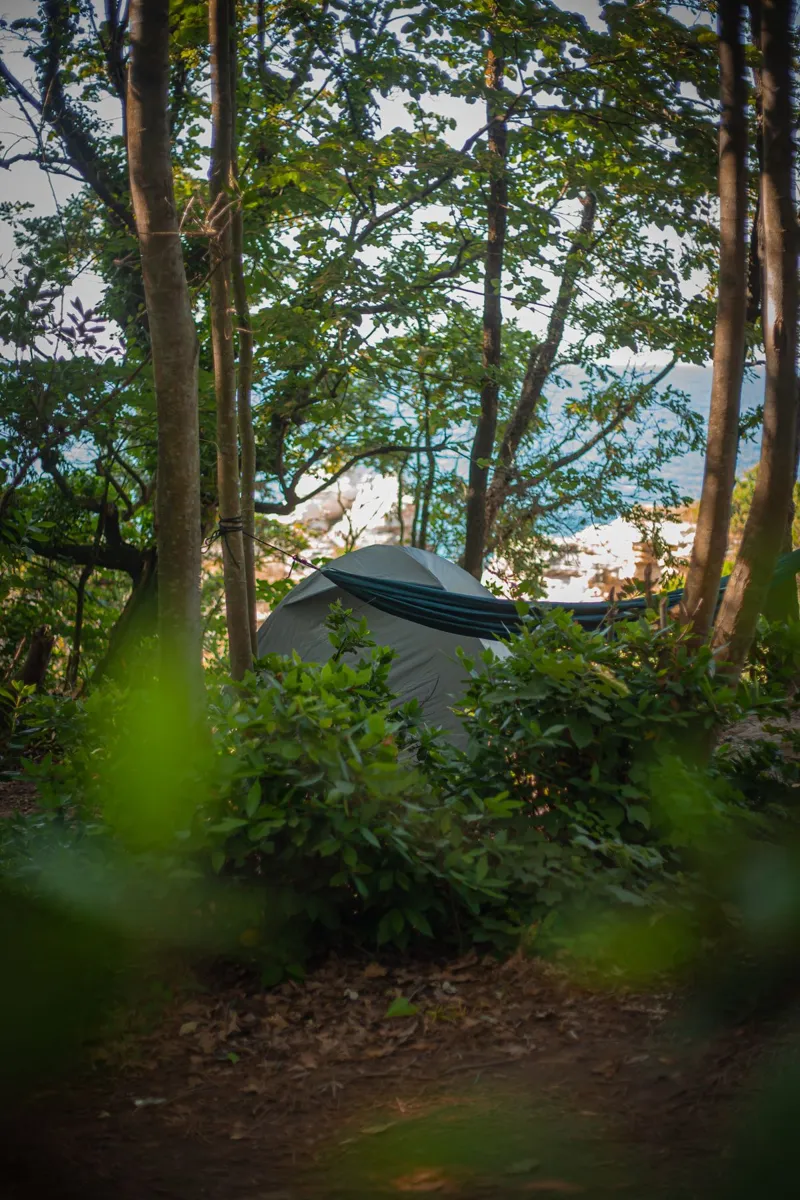
Breakfast is balanced on a cooler lid, someone needs the cooler opened, and the cups have nowhere else to go. A camp table can solve that routine frustration, but only if its height, stability and packed shape suit the rest of your setup. The widest tabletop is not automatically the most useful one when your car is already full.
Compare the options
Choose the task before the tabletop
List what the table needs to hold at the same time. Four plates and drinks, a chopping board with ingredients, and one mug beside a chair require different amounts of space. Measure a similar arrangement on your kitchen table rather than guessing from a product photograph.
Check whether your booked campsite already includes a picnic table. If it does, a small additional surface may be more useful than another large dining table. You can reserve the picnic table for eating while using the smaller one for personal items.
Match the height to the user
Sit in your camping chair and compare the table height with your elbows and knees. Deep low chairs can make an ordinary dining surface awkward. Check cross-braces and center supports, which can take away useful legroom even when the headline dimensions look generous.
For preparation work, think about how long you will stand. A table that is comfortable for a quick sandwich may be irritating for a long cooking session. Adjustable height can help, but only if the mechanism stays secure when used exactly as instructed.
Check the surface and load guidance
Read the manufacturer’s load limit and how the load must be distributed. A table is not a seat, step or climbing platform unless explicitly designed for that purpose. Test the locking mechanism on level ground before placing anything breakable on top.
Do not assume a metal-looking surface is approved for a stove or hot cookware. Check both the table and appliance instructions for heat, clearances and stability. Use outdoor cooking equipment only in its intended conditions and keep a clear workspace around it.
Rehearse the pack-up
Measure the folded dimensions against the real space in your vehicle. Long narrow bags and broad flat panels occupy different spaces. Consider whether the table will be the first thing packed or the last item you need access to at a roadside stop.
Look for an easy cleaning routine, especially around hinges and segmented tops. Let the table dry before storage. When two options solve the same task, favor the one you can open, clean and put away without creating another job for an already busy trip.
Questions before you buy
Do I need a dedicated camp kitchen station?
Only if its extra surfaces and storage solve a regular problem. A simpler table may be easier to transport and clean.
Can I put a stove on any camping table?
No. Check the table’s suitability and the stove manufacturer’s surface, clearance and stability requirements before use.
Sources & editorial notes
This guide combines original shopping scenarios and editorial reasoning with the published resources below. It does not claim hands-on testing. Product specifications, availability and retailer terms can change; verify the exact listing before purchasing. Sources checked October 4, 2026.
Found something that needs correcting? Contact the editor.