Picture the last mile back to the parking lot. The view has disappeared behind the trees, your lunch is gone and every downhill step reminds you that your toes are meeting the front of your shoes. Shopping for hiking footwear is partly about avoiding that very ordinary ending. The most useful pair is the one that suits your feet, your usual terrain and the way you actually walk.
Compare the options
Describe the trail you repeat most often
Before opening a retailer page, name three recent or planned walks. Were they smooth park paths, loose rocky tracks or muddy woodland? Was your pack small or full of shared supplies? Use those descriptions to explain what you need to a fitter. Avoid buying for an imagined expedition that may never happen.
Also include the journey to the trail. Someone who walks from a train station may value an everyday appearance and familiar feel. Someone changing footwear beside a car may prefer a more specialized pair. Neither choice is more authentic; they simply solve different days.
Run a deliberate fitting comparison
REI recommends trying hiking footwear later in the day, wearing the socks intended for the activity and bringing any orthotics you use. Its fitting guidance emphasizes room for toes without a cramped fit. Those are practical starting checks, not a guarantee that a particular advertised size will work.
Try both shoes and lace them as you intend to wear them. Walk for more than a few steps. Where a store provides a fitting ramp, assess how your feet move downhill. Note heel movement, pressure across the top and any rubbing seam. Ask about a different width or shape rather than assuming discomfort must disappear with wear.
Treat waterproofing as a use-case decision
A waterproof label should trigger questions, not end the comparison. Read what the manufacturer says about the construction and intended conditions, then think about your normal weather. Do you routinely walk wet grass on cool mornings, or mostly choose dry afternoons? A feature you never need should not outweigh a better fit.
Water can enter through the opening of footwear, so a membrane does not make a low shoe a sealed container. Plan for the conditions you expect and avoid using a shoe purchase as a reason to take on unsuitable terrain. Compare the waterproof and non-waterproof versions separately if both are available; do not assume they fit identically.
Evaluate the whole shoe, including the boring parts
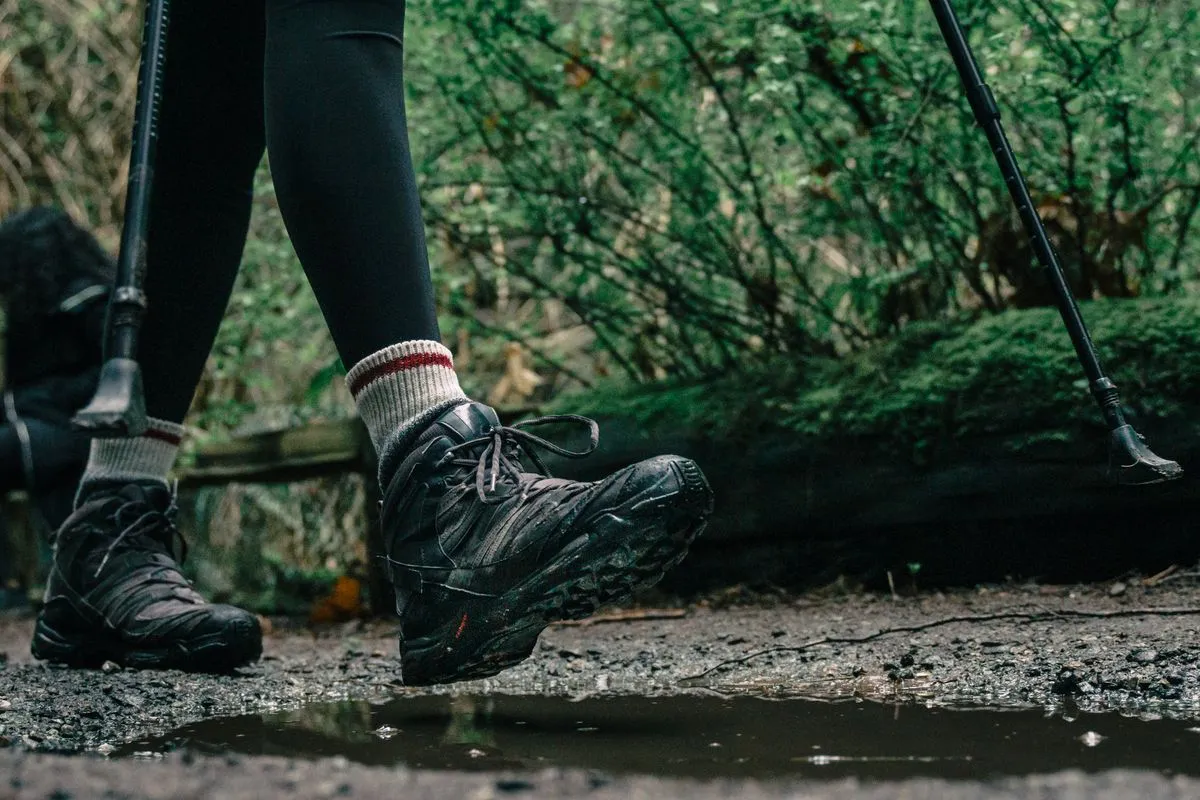
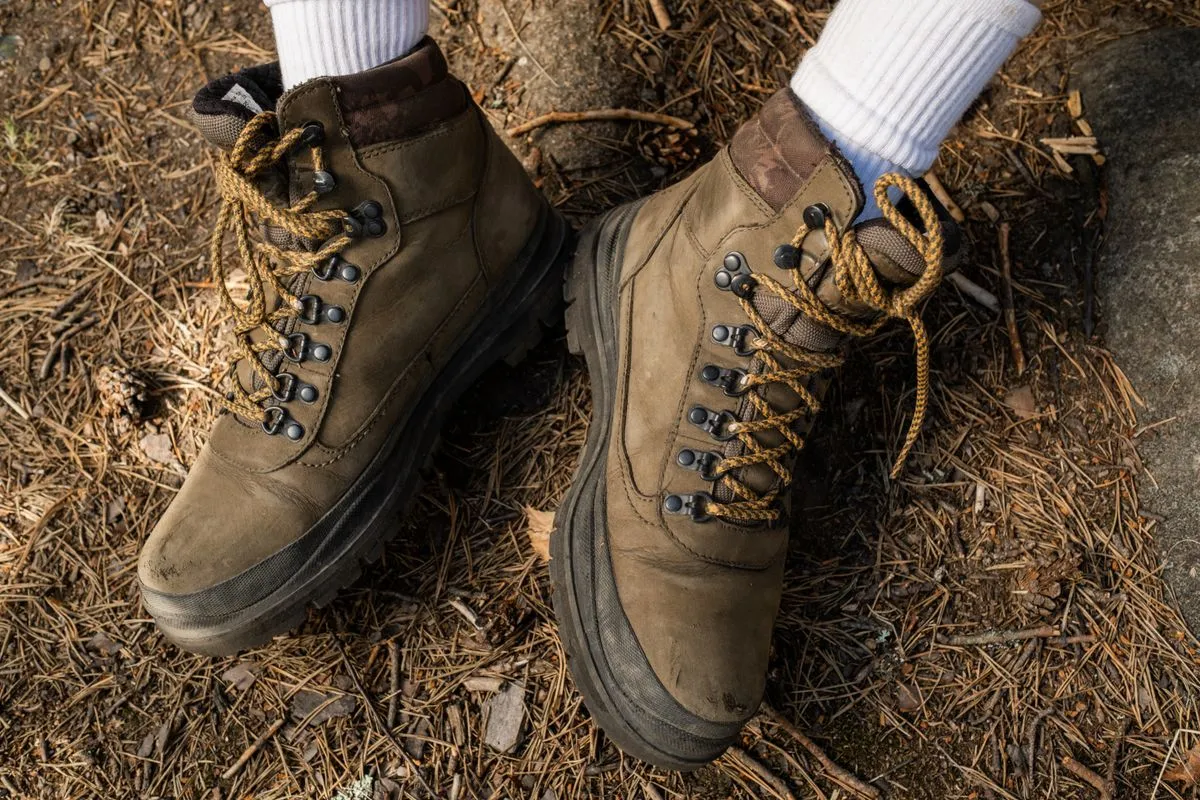
Look at how easily you can adjust the laces and whether the tongue stays comfortable as you bend your foot. Check that the toe area suits the socks you plan to wear. Turn the shoe over and compare tread arrangements, but resist treating a dramatic pattern as proof of grip on every surface.
For online orders, read the exact model name, width and version. A familiar family name can cover different generations and constructions. Save the product details with your order, especially if buying from a marketplace. A low price loses its appeal when the delivered size or variant differs from the one you researched.
Buy with a first-month plan
Keep the first walks short and familiar so you can identify a fit problem while changing plans remains easy. REI advises breaking in substantial boots before a trip. Do not interpret that as an instruction to ignore persistent discomfort or expect the wrong size to become correct.
Set aside time for care and drying after walks, following the maker's instructions. Check return rules before taking footwear outside, because a comfortable indoor trial and an outdoor return are different matters. If you are shopping during a sale, choose from pairs that fit first and compare prices second.
Questions before you buy
Should I always buy a larger size for hiking?
No universal size adjustment works for every foot and shoe. Compare the actual fit with your intended socks, including room at the toes and control at the heel. A specialist fitting is more useful than automatically adding half a size.
Do I need boots for my first hike?
Not automatically. Footwear depends on the route, conditions, load and your fit preferences. For a gentle local walk, your existing suitable shoes may be enough. Check route guidance before buying equipment for unfamiliar or demanding terrain.
Can socks fix an uncomfortable shoe?
They can change the feel and available space, but should not be used to disguise a clearly wrong shape or size. Try the shoe with the socks you actually plan to wear.
Sources & editorial notes
This guide combines original shopping scenarios and editorial reasoning with the published resources below. It does not claim hands-on testing. Product specifications, availability and retailer terms can change; verify the exact listing before purchasing. Sources checked October 4, 2026.
Found something that needs correcting? Contact the editor.