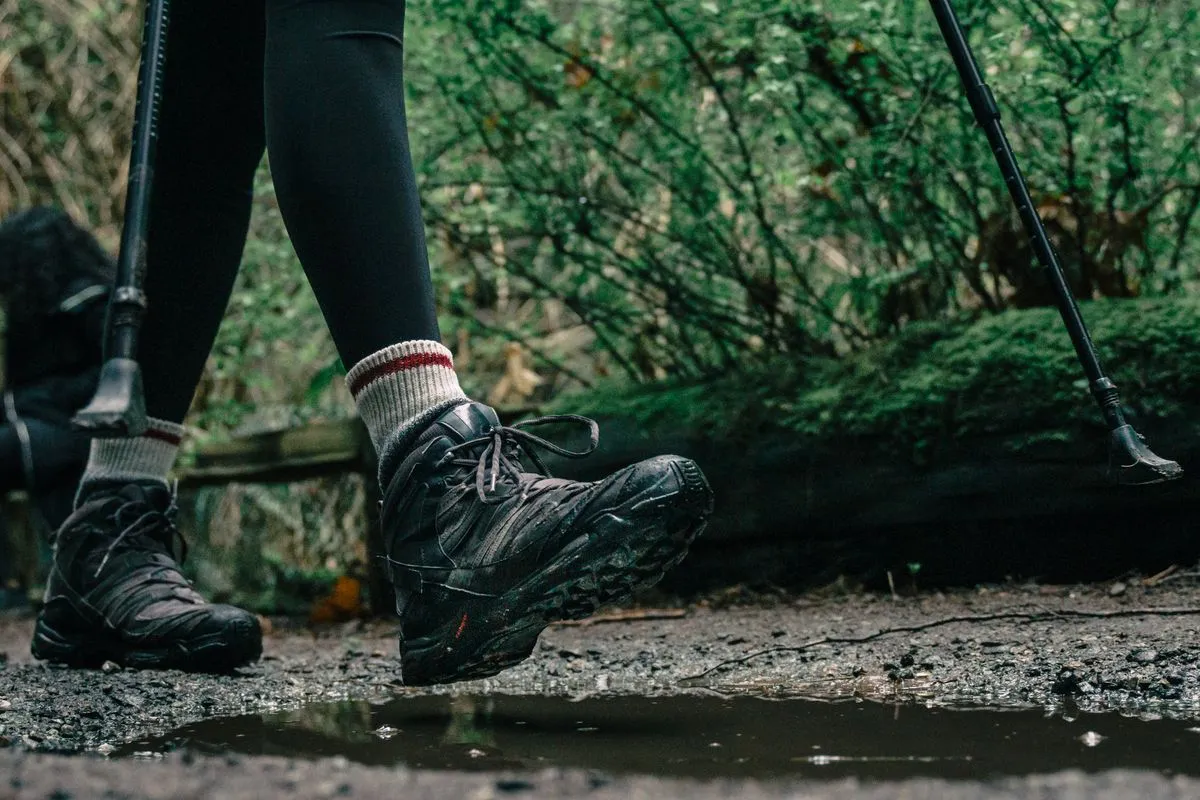
You are halfway around a hilly loop when the path turns into a long staircase of uneven stones. A companion has poles; you have a camera in one hand and a water bottle in the other. It is easy to conclude that buying poles would solve everything. The better question is whether you want to walk with them regularly, and how you will manage them when your hands need to do something else.
Compare the options
Decide when your hands will be occupied
Think through an entire outing, including checking a map, opening a snack and taking a photograph. If you repeatedly set poles down, a reliable way to attach them to your pack may matter more than a small difference in weight. Try the pack attachment with the poles you are considering rather than trusting a generic compatibility claim.
For walks that combine pavement and trails, investigate the maker's tip accessories and local trail rules. Keep all small removable pieces in one pouch at home. A collection of tips and baskets is useful only if you know which parts you own and can find them before leaving.
Understand the basic construction tradeoffs
REI describes aluminum as generally economical and durable, while carbon designs can reduce weight but are more vulnerable to breakage under high stress. Its guide also distinguishes external lever locks, twist locks and push-button systems. Those broad differences help organize a shortlist; they do not prove the quality of an individual product.
Open and close the exact mechanism several times. Can you tell when it is secure? Can you see the length markings? If wearing gloves is part of your normal walking routine, repeat the check with them. An adjustment that is pleasant at a kitchen table may feel much less straightforward when your hands are cold or tired.
Buy for your hands as well as your height
Handle shapes vary enough that a fashionable grip material should not decide the purchase. Hold the poles with a relaxed hand and notice where your fingers sit. Are there ridges or seams that bother you? Does the strap adjust easily enough for the way you intend to use it? Ask the shop to demonstrate correct setup.
Check the usable length range against the manufacturer's fitting instructions. This matters especially for fixed-length folding models and for poles bought as gifts. Instead of guessing a size from a photograph, let the recipient participate in selection or choose a retailer with suitable exchange terms.
Inspect the details that determine ownership
Look for an accessible instruction manual before ordering. It should explain assembly, adjustments, maintenance and limits. Also check whether tips or individual sections can be replaced through the brand. Replaceable parts do not guarantee low lifetime cost, but knowing the options makes a price comparison more meaningful.
REI advises checking that locks remain secure because they can loosen over time. Make inspection a normal pre-walk habit, following the maker's guidance for tension and cleaning. If a pole is damaged or a mechanism will not hold, stop relying on it rather than trying to compensate with a tighter grip.
Avoid paying for a problem you do not have
If you are unsure whether you enjoy using poles, borrow a suitable pair for an easy familiar walk. Notice whether you actually use them for most of the route. That experiment gives you a concrete reason to prioritize compact storage, easier adjustment or a different grip.
When comparing retailer listings, confirm whether the price is for one pole or a pair and whether the photographs show optional accessories. Compare delivered cost, warranty terms and replacement availability. Buy the least complicated design that fits your regular use, leaving specialized features for a need you can explain in one sentence.
Questions before you buy
Is one pole enough?
A single staff and a pair create different walking routines. If you are curious, try borrowed equipment on an easy route before purchasing. This guide focuses on shopping for pairs, without assuming every walker needs two poles.
Can I use poles to make a difficult crossing safe?
Do not treat equipment as permission to enter an unsafe crossing. Route conditions and your abilities determine whether to continue. Follow local guidance and turn back when a route exceeds what you can safely manage.
Are lighter poles always worth more?
Only when the difference matters in your use. Someone who carries poles all day may value it more than an occasional walker. Compare comfortable grips and dependable operation before paying extra to reduce weight.
Sources & editorial notes
This guide combines original shopping scenarios and editorial reasoning with the published resources below. It does not claim hands-on testing. Product specifications, availability and retailer terms can change; verify the exact listing before purchasing. Sources checked October 4, 2026.
Found something that needs correcting? Contact the editor.